
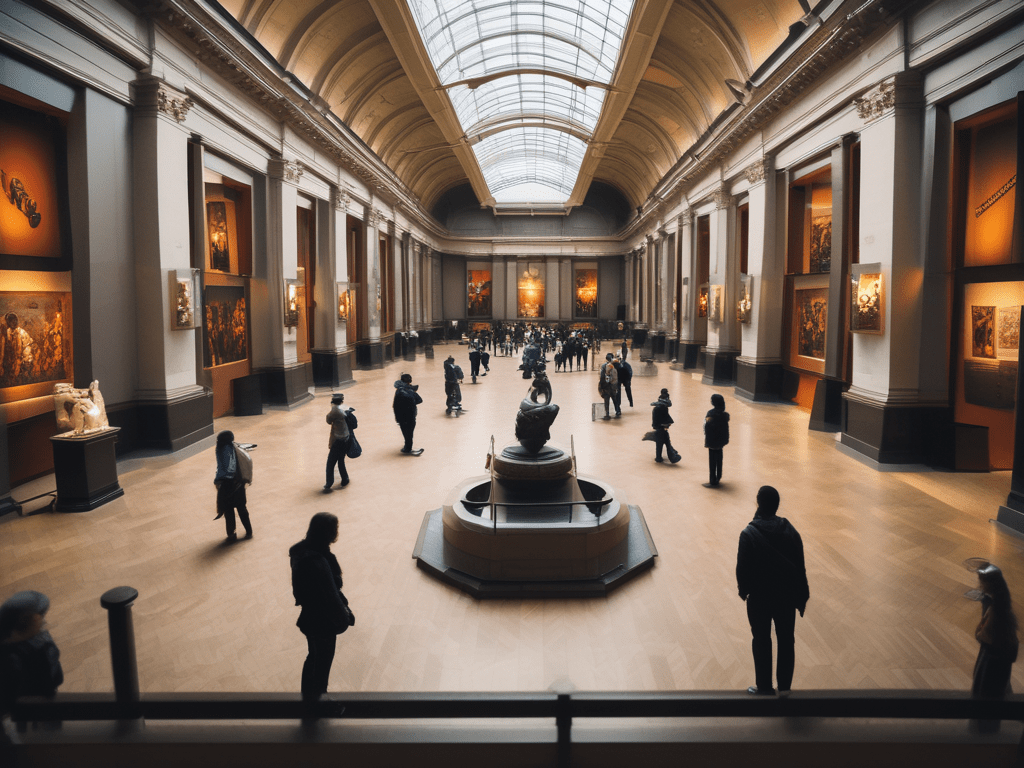
According to unofficial data, there are currently around 55,000 museums in the world. Some of them keep amazing collections of famous artists while some are dedicated to extremely unusual objects, themes and aspects of life. Since I am also a big fan of museums and galleries, I was interested in researching the psychology of museum visits and the reason why museums attract us. It is clear that we live in the 21st century and that social networks are all around us. What I have noticed is that people in museums carry their phones around trying to take pictures of every part of the museum while objectively missing out on the enjoyment of that moment. In this blog post, I discuss the psychology behind it and answer the question, do people go to cafes because the trend is to post a picture on social media, or do they still know how to enjoy the moment?
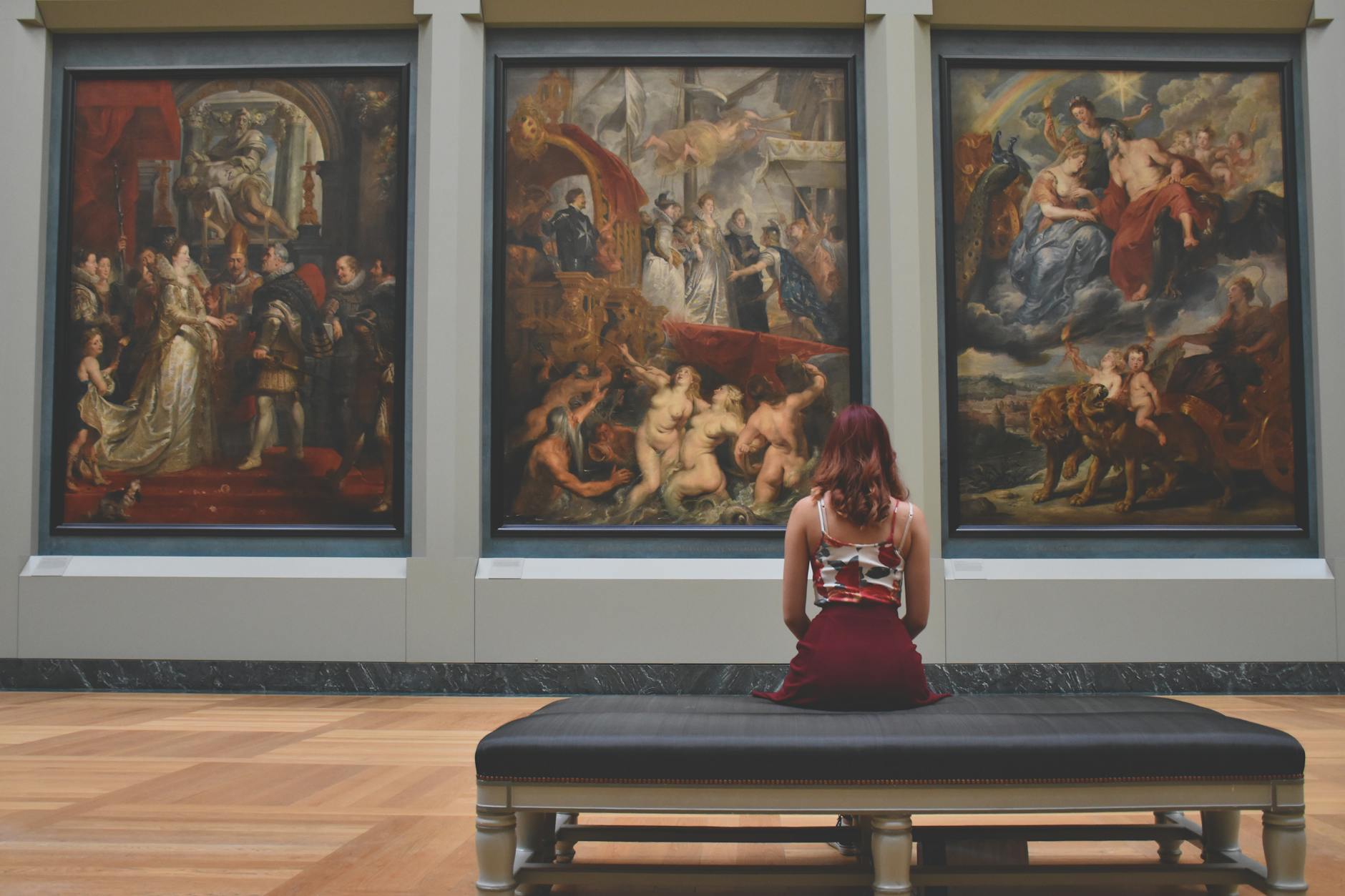
Museums have transcended their traditional role as mere repositories of knowledge to become vibrant centers of cultural exchange and exploration. They offer visitors a portal to different eras, civilizations, and artistic movements, fostering a deeper understanding of humanity’s collective heritage. From the Louvre in Paris to the Metropolitan Museum of Art in New York City, these institutions attract millions of visitors annually, drawn by the promise of encountering the extraordinary.
The Psychology of Museum Visits
At the heart of our affinity for museums lies a complex interplay of psychological factors. Firstly, there’s the allure of novelty and discovery. Human beings are inherently curious creatures, drawn to the unknown and the unusual. Museums satisfy this innate curiosity by offering a glimpse into worlds both familiar and alien, stimulating our senses and intellect in the process.
Moreover, museums serve as repositories of cultural capital, embodying prestige and refinement. Visiting these esteemed institutions confers a sense of cultural sophistication, bolstering one’s social identity and status. In an age where image-consciousness prevails, the act of frequenting museums can be viewed as a form of cultural consumption, a way of signaling one’s refined tastes and intellectual pursuits.

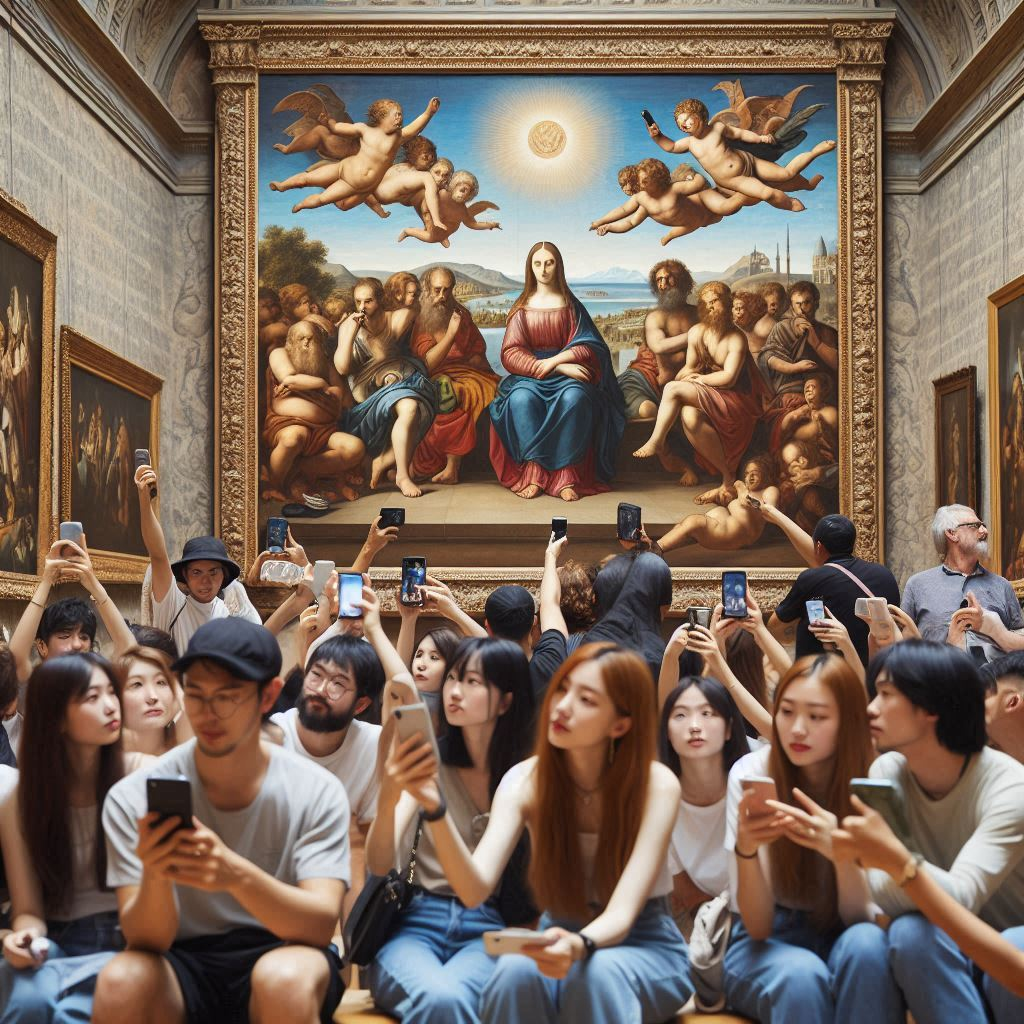
However, the advent of social media has introduced a new dimension to the museum experience. With platforms like Instagram and Facebook dominating our digital landscape, the pressure to curate the perfect online persona has never been greater. As a result, museum visits have become inherently intertwined with the act of digital documentation. Visitors flock to these cultural landmarks not only to appreciate the exhibits but also to capture Instagrammable moments for their online followers.
The Paradox of Digital Documentation
While the impulse to document our museum visits is understandable, it raises questions about the nature of our engagement with the exhibits. In our quest to immortalize every moment through the lens of our smartphones, are we inadvertently sacrificing the depth of the experience itself? Research suggests that excessive smartphone use can lead to a phenomenon known as “digital distraction,” wherein individuals fail to fully engage with their surroundings due to constant interruptions from technology.
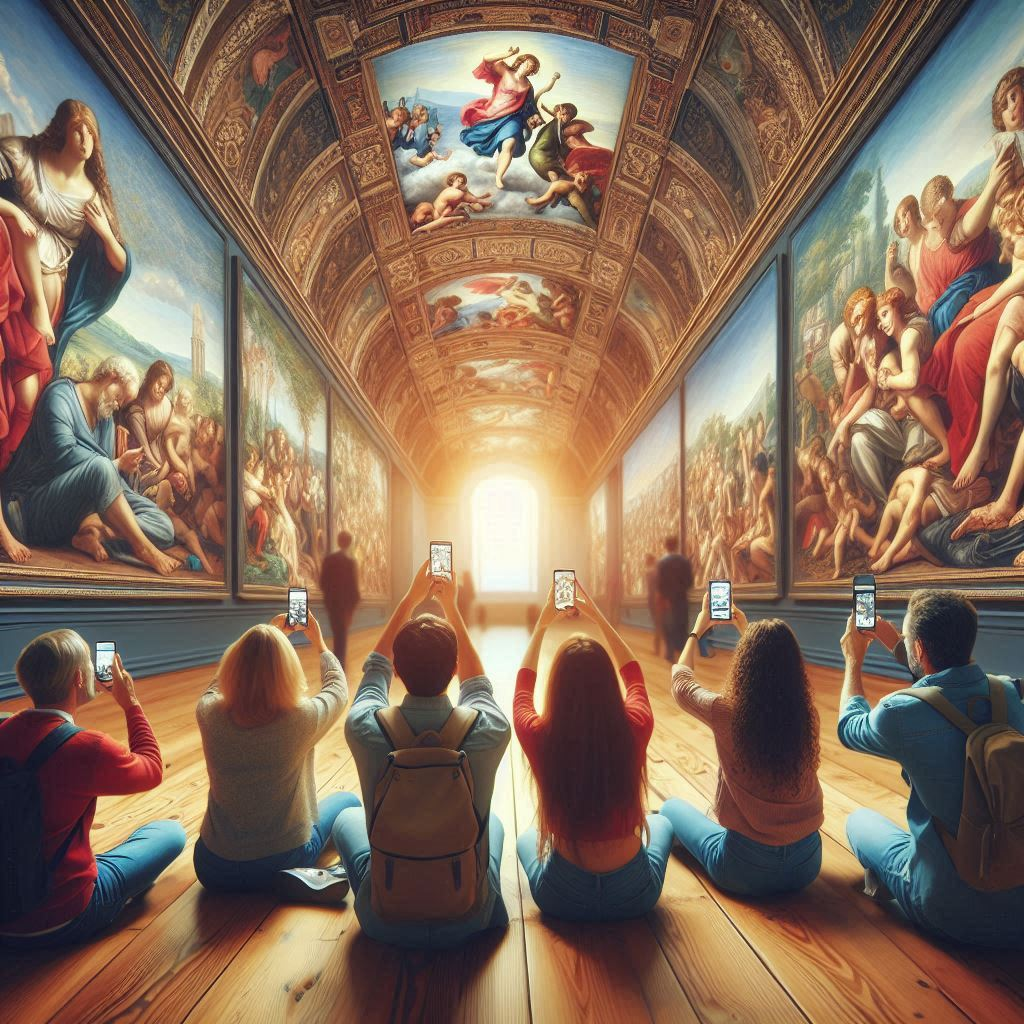
Moreover, the act of photographing exhibits can create a psychological distance between the viewer and the artwork. Instead of immersing ourselves in the aesthetic beauty or historical significance of a piece, we reduce it to a mere photographic subject, devoid of context or meaning. In essence, we prioritize the act of capturing the moment over the experience of savoring it.
Rediscovering the Art of Presence
In light of these observations, it’s crucial to reconsider our approach to museum visits in the digital age. While there’s certainly value in documenting our experiences for posterity, we mustn’t allow technology to detract from the richness of the moment itself. Instead of viewing museums as mere backdrops for Instagram-worthy photoshoots, let’s strive to cultivate a deeper connection with the exhibits and the stories they tell.
This entails adopting a mindset of mindfulness and presence, wherein we consciously engage with our surroundings without the constant distraction of digital devices. By immersing ourselves fully in the museum experience, we open ourselves up to moments of wonder, introspection, and enlightenment. Whether we’re marveling at a masterpiece or pondering the significance of a historical artifact, let’s embrace the inherent beauty of the present moment.
Conclusion
In the age of social media saturation, the allure of museums remains as potent as ever. Yet, amidst the frenzy of digital documentation, it’s imperative that we pause to reflect on the true essence of the museum experience. By understanding the psychology behind our fascination with these cultural institutions, we can strive to strike a balance between capturing moments and savoring experiences. Let’s reclaim the art of presence and rediscover the joy of being fully immersed in the rich tapestry of human history and creativity that museums have to offer.




 Pavle Ristić
Leave a comment