
What Do You Mean “Severed”?
I’m sure you’ve thought about the complexity and intertwining of work and personal life at some point. There’s this motto that the two don’t go together and that there should be a boundary between them. However, does that boundary really exist? Well, on the TV show “Severance”, it certainly does.
Picture this: you leave the office, and every deadline, awkward meeting, and passive-aggressive email vanishes from your brain. Severance takes that daydream to the extreme—employees at Lumon Industries have their work and personal memories surgically severed, creating two separate selves who never meet. It’s a seductive setup, especially if you’ve ever fantasized about flipping a switch to escape the grind. Think about those late nights when you’re doomscrolling instead of sleeping because your brain won’t let go of tomorrow’s to-do list. Severance taps into that universal ache for a clean break, making it instantly relatable.
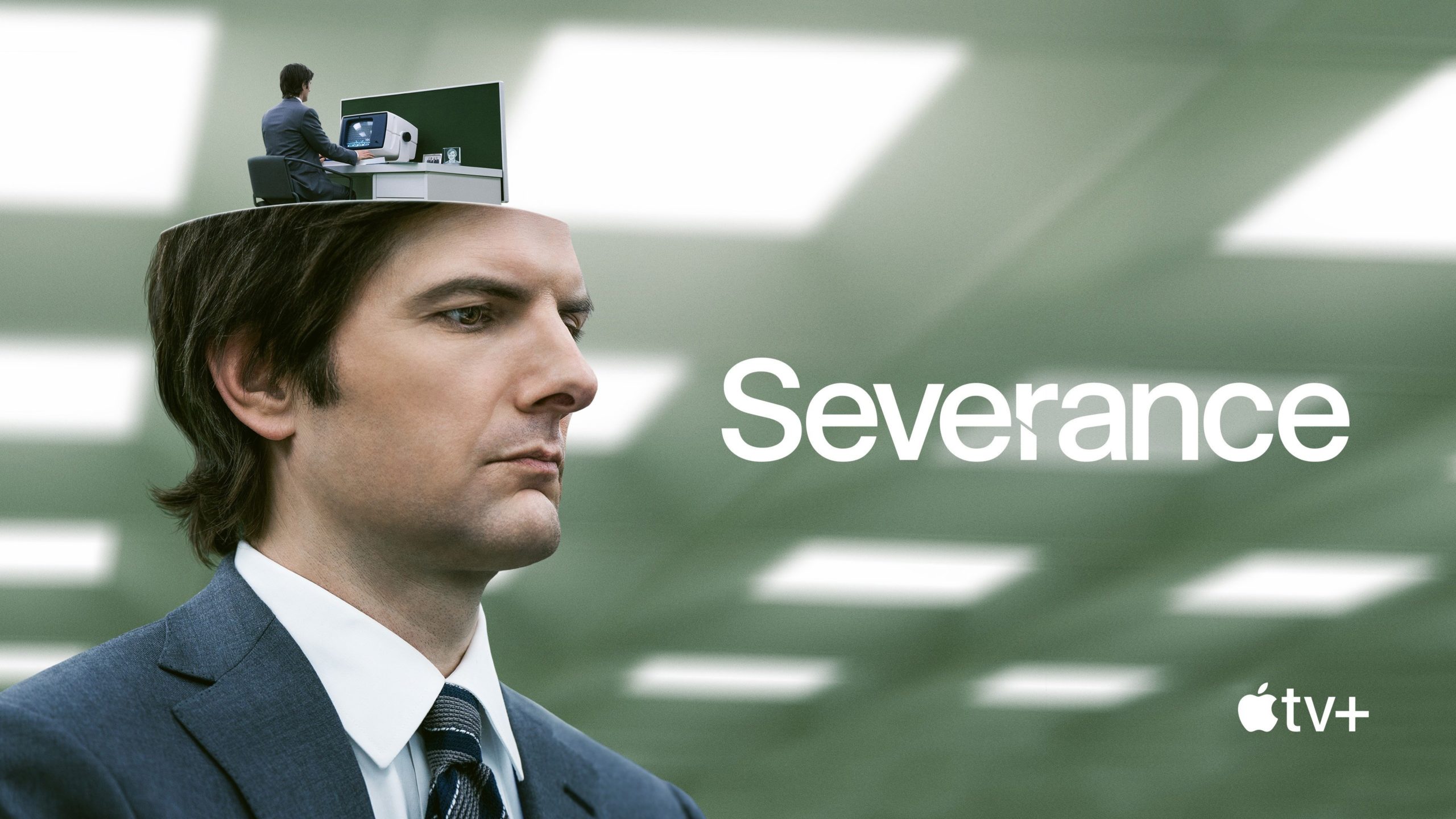
But here’s where it gets juicy: the show doesn’t just hand you the fantasy—it twists it. Your love partner in real life can be your colleague you do not like at work; or even worse your boss. What starts as a perk reveals itself as a trap, hinting at the cost of disconnection. It’s like those moments in real life when you realize compartmentalizing isn’t working—maybe you’ve snapped at your partner over something that happened at work, or you’ve caught yourself faking a smile to hide how drained you are. Severance holds up a mirror to that struggle, asking how much we lose when we try to slice ourselves into neat little boxes. It’s a hook that’ll pull you in, especially if you’ve ever felt like your “work self” is a stranger to the real you.

A Chilling Take on Corporate Overreach
Severance isn’t shy about skewering the corporate machine. Lumon Industries doesn’t just demand your time—it stakes a claim on your mind, turning severance into the ultimate employee retention scheme. It’s dystopian, sure, but it’s not far off from the real-world creep of workplace culture. Think about those “team-building” retreats that feel more like loyalty tests, or the way companies push wellness apps while quietly expecting you to answer emails at midnight. Severance dials that up, showing a world where your boss doesn’t just control your output—they control who you are from 9 to 5.
The brilliance is in how familiar it feels. We’ve all seen the headlines about burnout rates soaring, or heard friends joke about “living for the weekend” like it’s normal to hate five days out of seven. Severance takes that quiet desperation and gives it teeth, wrapping it in a story that’s as gripping as it is grim. It’s not preachy—it’s a slow reveal that lets you connect the dots to your own life. If you’ve ever felt like your job owns more of you than you’d like to admit, this show will hit you right in the gut and keep you watching to see how far the rabbit hole goes.
If we translate all this into the field of mathematics and the time of labor protests for 8 hours of work, 8 hours of culture, and 8 hours of sleep, we come to the conclusion that Lumon Industries takes a third of your life. So for one third of your life, you are someone else, and you don’t know anything about him at all, or should I say better about yourself?
Architecture and Aesthetics: Socialism’s Ghost in Retro-Futurist Glory
Visually, Severance is a feast—and it’s no coincidence. The Lumon offices are a maze of stark, symmetrical corridors and brutalist concrete, paired with retro typewriters and pastel furniture that scream mid-century optimism gone stale. It’s like stepping into a Yugoslavian government building from the socialist era—think Tito’s Belgrade, all grand promises of equality etched in cold, unyielding stone. The aesthetic isn’t just pretty; it’s a silent player in the story, radiating control and conformity. It’s as if the show is riffing on the old socialist dream—everyone in their place, working for the collective—while exposing the suffocating reality underneath.
Compare that to today: our open-plan offices with ping-pong tables and “fun” vibes are just a shinier version of the same game. They’re designed to keep us comfortable but contained, productive but never questioning. Severance uses its eerie, time-warped look to make you feel that tension—like when you walk into a corporate HQ and sense the unspoken rules in the air. It’s a visual hook that’ll draw you in if you love a show that’s as smart to look at as it is to think about. Plus, the Yugoslavia vibe adds a layer of historical intrigue—perfect for anyone who geeks out over design with a deeper story. Do not tell me that Harmony Cobel’s car does not resemble of a Yugo?

The Deeper Question of Who You Really Are
What keeps Severance buzzing in your head is its slow, deliberate unraveling of identity. When your work self and home self don’t share memories, which one’s the “real” you? The show doesn’t rush to answer—it lets you sit with the unease, like a philosophical puzzle wrapped in a thriller. It’s a question we wrestle with daily. Maybe you’ve caught yourself acting one way with coworkers and another with friends, or wondered why you feel so different scrolling X alone at night versus laughing at a party. Severance takes that inner tug-of-war and makes it literal, pulling you into its world with every ambiguous twist.
This split echoes Marxist ideas—your labor alienates you from your true self, turning you into a cog in the capitalist machine. Lumon’s severance feels like Marx’s nightmare: workers so estranged from their humanity that they’re split in two, serving profit over personhood. In our hyper-connected age, curating personas online and juggling roles IRL, the show feels like a wake-up call. Think of losing yourself in a job or doomscrolling spiral, wondering who’s left when the noise stops. Severance thrives in that gray space, a must-watch for anyone questioning where “they” end and the masks begin. It’s a slow burn that’ll leave you hungry for more.

Ok, But Where Is The Plot? Innie vs. Outie
The plot of Severance springs from a wild yet simple idea: what if a company could surgically split your work and personal memories, creating two versions of you that never overlap? It’s helmed by creator Dan Erickson and brought to life with Adam Scott leading a stellar cast, all set in the eerie halls of Lumon Industries. Here’s a small spoiler alert—don’t worry, I’ll keep it vague: the story teases chaos when unsevered folks step onto the severed floor, or when severed employees stumble into the real world. What happens when those walls crumble? The show thrives on that tension, but to find out how it unfolds, you’ll have to watch Severance yourself—it’s worth every twisty minute.


 Pavle Ristić
Leave a comment